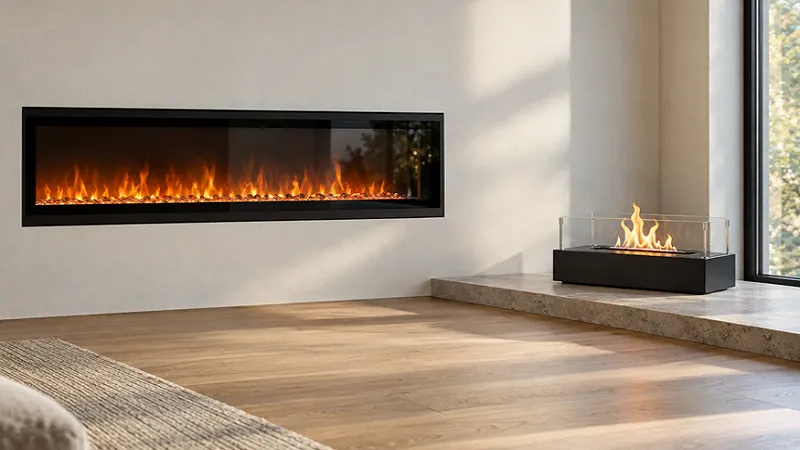
Contemporary fireplaces often serve as much as design centrepieces as sources of warmth, with many homeowners prioritising atmospheric features that complement open-concept living. Two of the most popular chimney-free options, electric and bioethanol fireplaces, have become common choices for homes seeking convenience and style. Brands such as bioethanol-fireplace.co.uk are sometimes referenced when discussing these alternatives, reflecting interest in clean-burning and versatile fire features.
How electric and bioethanol fireplaces function
Electric fireplaces simulate the look of a real flame using LED lighting technology, sometimes paired with gently moving patterns to mimic flickering fire. Most models provide heat through a built-in fan heater or infrared element, controlled by thermostats or remote devices. Unlike traditional wood-burning fireplaces, they do not produce real flames or combustion gases.
Bioethanol fireplaces, by contrast, use liquid bioethanol fuel that burns to produce a genuine flame. This creates an authentic fire experience, generating both light and radiant warmth without the need for a flue or chimney. Since the flame is real, the ambience is subtly different from electric models, with actual combustion occurring in a controlled burner.
Installation and positioning factors
Electric fireplaces are usually straightforward to install, often requiring nothing more than access to a standard electrical socket. Some designs are wall-mounted for a clean, integrated appearance, while others are freestanding and portable. When choosing a location, a stable surface and access to power are essential. Installation is generally non-disruptive to interiors.
Bioethanol fireplaces do not require mains power but do need careful placement. Stable positioning is necessary, especially for tabletop or portable types, to prevent accidental knocks. While extensive ventilation is not typically required, allowing for some airflow, such as an open window or vent, is sensible. Clearances from curtains, furniture, and other combustibles should always be observed.
Heat output and room suitability
Both electric and bioethanol fireplaces are intended as supplementary sources of heat rather than replacements for central heating. Electric models typically provide modest warmth, enough to comfortably take the edge off in a living room or bedroom when temperatures drop. Bioethanol fireplaces can provide a similar level of heat, but the radiant warmth can feel cosy in smaller or well-insulated rooms.
In practical terms, either type can work well in apartments, studios, or distinct zones within larger open-plan spaces. Larger rooms may require additional heating sources for full comfort during cold weather.
Visual impact and interior style
Electric fireplaces are notable for their customisation options. Many allow you to change flame colour, adjust brightness, or pair them with media walls for a streamlined look. Some built-in designs can disappear into the architecture, giving a subtle but effective modern touch.
Bioethanol fireplaces provide the visual element of a real flame. Their styling ranges from sleek tabletop pieces to bold freestanding centrepieces. The absence of electric cables can also enable creative placement and make a bioethanol fire an impactful design focal point.
Maintenance and day-to-day use
Electric models are valued for their low maintenance. A simple wipe-down of the glass and occasional dusting keeps them looking clean. With no physical fuel to handle, operation is as easy as flipping a switch or pressing a remote.
Bioethanol fireplaces do require periodic refuelling, as well as cleaning of the burner components to prevent residue build-up. Safe handling of fuel and storage is important. Spills should be wiped up immediately, and only approved bioethanol should be used.
Running costs, efficiency, and environmental points
Electric fireplaces convert almost all consumed energy into heat, although the electricity source and local tariffs affect overall cost and emissions. Bioethanol fireplaces use plant-derived alcohol for fuel. Burning typically produces minimal soot and no ash, but ongoing fuel costs can add up depending on usage frequency.
Safety features and practical precautions
Modern electric fireplaces are typically equipped with safety features such as automatic shut-off in case of overheating or if tipped over, and timers for peace of mind. Bioethanol units benefit from sensible precautions: never pour fuel onto a burning flame, allow the burner to cool before refilling, and ensure proper clearance around the unit. Following manufacturer guidelines is essential for both types.
Finding the right fit for your space
Choosing between electric and bioethanol fireplaces comes down to your lifestyle and aesthetic priorities. Electric options are ideal if you value ease of use, minimal maintenance, and design flexibility. Bioethanol suits anyone seeking a real flame effect within a contemporary footprint, provided you are prepared to refuel and handle the open flame with care. Both can deliver ambience and warmth that helps transform modern living spaces without the commitment of a traditional fireplace.