
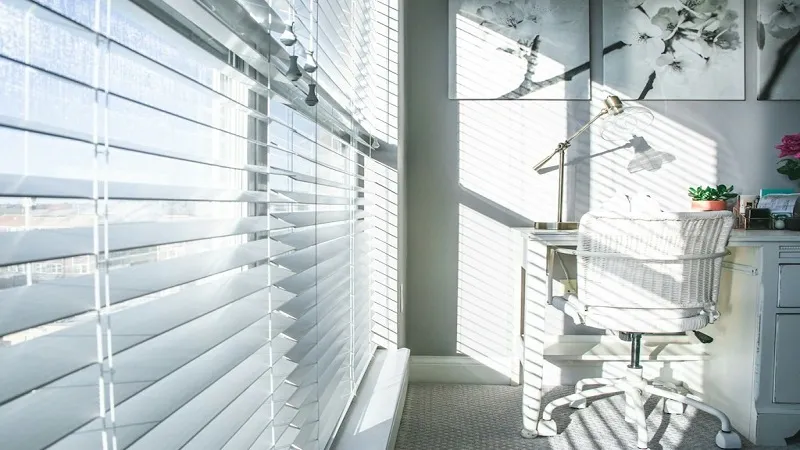
London homes rarely have windows that match a standard size. Bay windows, sash frames, loft conversions and new-build openings all differ, and an off-the-shelf blind often leaves gaps at the sides or hangs unevenly. Made to measure blinds and curtains are cut to the exact dimensions of the window, which gives a neater result and a better control of light. This guide explains how the process works, from measuring and choosing fabric to professional fitting and aftercare.
Why made to measure suits London homes
The housing stock in London ranges from Victorian terraces to glass-fronted towers, and the windows reflect that variety. A period property may have tall sash windows with deep reveals, while a new-build flat may have wide, floor-to-ceiling glazing. Standard blinds are produced in a limited range of widths, so they either overlap the frame or leave a gap that lets light in.
A made to measure product removes that compromise. The fabric, the headrail and the width are all produced for the specific window, which means the blind sits squarely and the curtain hangs at the chosen length. This is particularly valuable in bays and odd-shaped windows, where each section requires a different size.
Light and noise are two further factors in a busy city. A blind that closes fully against the frame blocks street lighting at night, and a lined curtain softens traffic noise to a modest degree. For bedrooms facing the road, a combination of the two often makes a noticeable difference to sleep.
There is also a benefit for the interior as a whole. A tailored window treatment coordinates with the colour scheme, the furniture and the floor, so it contributes to the room instead of simply covering the glass. For rooms that are used every day, the improved light control and privacy are the practical returns on that investment.
Measuring windows accurately
Correct measurement is the foundation of a good result. The first decision is whether the blind will sit inside the window recess or outside it, covering the frame and the wall around it. A recess fit has a slim, tidy look, while an exact outside fit hides the frame and improves light blocking.
The following steps describe a sound approach:
- measure the width in three places, at the top, middle and bottom, and use the smallest figure for a recess fit,
- measure the height on the left, centre and right and, for a recess, use the longest figure,
- check the depth of the recess to make sure the headrail can be housed inside,
- note any handles, radiators or sills that might obstruct the fabric,
- write each measurement to the nearest millimetre and record which window it refers to.
Bay windows deserve special attention. Each section of a bay is measured separately, and the angle between the sections affects how a blind or track is laid out. A curved track can follow the shape of the bay for curtains, whereas blinds are normally made as a set of individual units so that each pane can be operated on its own.
These checks take about 15 minutes per room, and they prevent the most common mistakes. Rooms with unusual windows, such as arched tops or sloping loft glazing, are usually easier to handle when a professional visits to take the measurements, since the supplier is then responsible for the accuracy.
Choosing fabrics, linings and operation
Fabric is the part of the process that most customers enjoy, and the choice is wide. Roller blinds offer clean lines and a huge selection of colours, Roman blinds fold into soft pleats, venetian blinds allow precise control of light and pleated blinds suit awkwardly shaped windows. Samples are well worth requesting, since colours look different on a screen than in the actual light of the room.
For curtains, the lining often matters as much as the main fabric. A standard lining protects the material from sunlight and gives the curtain weight, a thermal lining adds insulation for colder months, and a blackout lining suits bedrooms and nurseries. Combining a light curtain with a blind behind it is a common way to have both daytime filtering and night-time darkness.
Practical matters should enter the decision early. Kitchens and bathrooms benefit from wipeable, moisture-tolerant fabrics, and rooms with strong sun need materials that resist fading. Asking the supplier about the care instructions before ordering avoids surprises when the first spillage occurs.
Operation should be matched to how the window is used. Cordless or chain-operated roller blinds suit family homes, while motorised blinds are convenient for high windows and for rooms where several blinds are operated together. Where children are present, safety devices that secure chains and cords are a standard requirement.
Curtain headings, fullness and length
The look of a curtain depends largely on its heading, which is the way the fabric is gathered at the top. Pencil pleat is classic and soft, pinch pleat is tailored and formal, wave is modern and uniform, and eyelet curtains give a casual, relaxed drape. The heading also affects how the curtain moves, so it is worth thinking about whether the curtains will be drawn every day.
Fullness describes how much fabric is used compared with the width of the track. A ratio of about 2 to 1 gives a generous, rich look, while 1.5 to 1 is a lighter option for modern interiors. Too little fabric makes curtains appear flat when they are closed, whereas too much can overwhelm a small window.
Poles and tracks complete the choice. A pole is a visible feature that suits traditional and statement interiors, while a slim track disappears into the ceiling and keeps the focus on the fabric. Whichever is selected, it should extend beyond the window by about 15 cm on each side, so that the curtains clear the glass when open and let in the maximum amount of daylight.
Length completes the picture. Curtains can finish just above the sill, just below it or at floor level, and each has its own character. Floor-length curtains make a room feel taller, and sill-length curtains are more practical in kitchens and where radiators sit beneath the window.
Professional fitting and what to expect
Fitting is the stage where made to measure products show their value. A fitter checks the fixing surface, whether plaster, brick or concrete, selects the right fixings and positions the track or headrail level with the window. Heavy curtains, in particular, depend on secure fixing, because the combined weight of fabric and lining can be considerable.
The timeline is usually straightforward. After the measure, production commonly takes around 2 to 4 weeks, depending on the fabric and the product, and fitting is booked once everything is ready. The fitter then demonstrates the operation, shows how to remove curtains for cleaning and tidies the work area.
It also helps to prepare the room before the fitter arrives. Clearing the area beneath the window, moving furniture away from the wall and making sure the old fittings can be removed speeds up the visit. In flats, a short check of access arrangements, such as parking or lift booking, prevents delays on the day.
When comparing providers, Londoners will find national chains as well as local firms such as Kelly’s Blinds London, which combine made to measure blinds and curtains with fitting in one service. Choosing a single supplier for measuring, making and fitting simplifies responsibility, because the same team answers for the result.
Windows dressed to last
Made to measure blinds and curtains deliver a better fit, better light control and a neater finish than standard products, particularly in the varied windows of London homes. The key stages are accurate measuring, a sensible choice of fabric and lining and careful fitting by experienced installers.
It is wise to review the window treatments every few years. Fabrics can fade, linings can wear and household needs change, for example when a spare room becomes a nursery or a home office. Because the original measurements are on file, updating a blind or a pair of curtains is usually faster than the first order.
Aftercare keeps the investment in good condition. Regular vacuuming or dusting, gentle spot cleaning in line with the fabric care label and an occasional check of the fixings help blinds and curtains look good for many years. With those habits in place, the window treatment remains a practical and attractive part of the room.
Frequently asked questions about made to measure blinds and curtains
What does made to measure mean?
The product is produced to the exact dimensions of the window, instead of being cut down from a standard size.
Should blinds be fitted inside or outside the recess?
An inside fit looks neat and slim, while an outside fit covers the frame and blocks more light.
How much fabric do curtains need?
Fullness of about 2 to 1 gives a rich look, and 1.5 to 1 suits a lighter, modern style.
How long does production take?
Around 2 to 4 weeks is typical, depending on the product and fabric.
Can blinds and curtains be combined?
Yes, a blind behind a light curtain gives daytime filtering and night-time darkness.