
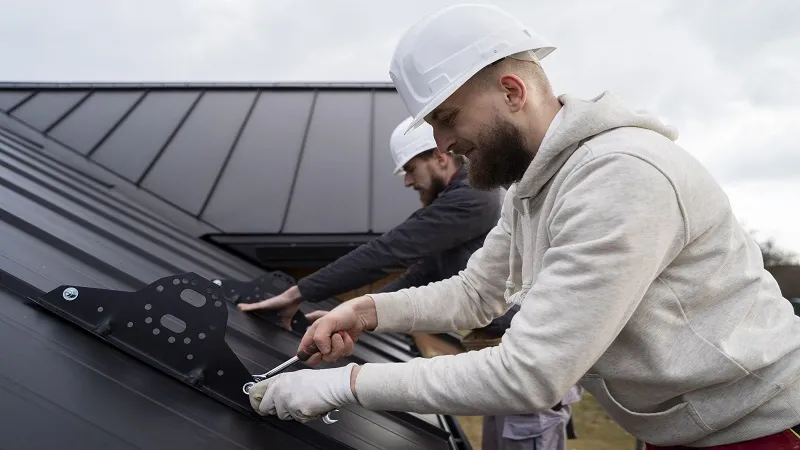
There’s a particular sound a failing flat roof makes. It’s not a drip, not at first. It’s a soft tick on the kitchen extension ceiling at about two in the morning, after the wind has been coming in off the Irish Sea all evening and the rain has finally found the seam it’s been working on since spring. By the time you see a stain, the boards underneath have usually been wet for a while.
Flat roofs often have a poor reputation, and in many cases, there are valid reasons for it. Most of the ones we’re called out to were done cheaply, done quickly, or done thirty years ago and never touched since. But a well-built flat roof on a Southport extension, garage or dormer can last a long time. The trick is knowing whether yours needs a patch, a new covering, or a proper strip back to the joists. Here’s how to tell, and what each one costs.
Why Flat Roofs Struggle on the Coast
The weather here isn’t the wettest in the North West. Strong coastal winds cause most of the damage. Southport’s exposed location leaves homes vulnerable to harsh sea breezes, which put roofs under constant pressure. Salt in the air also accelerates corrosion and deterioration of metal components, including trims, fixings, and older leadwork.
Wind is especially hard on flat roofs because it lifts. A felt roof with a weak edge detail will flap, very slightly, every time a gust comes over, and that movement slowly breaks the bond at the perimeter. Once water gets under the edge it tracks inwards across the deck, and the leak inside often appears metres away from where it got in. That’s why so much of the work that comes through as general roof repairs in Southport ends up being flat roof edges and upstands rather than the main pitched roof.
Housing stock matters too. Birkdale and Hillside feature large Victorian and Edwardian homes, many with flat-roofed bay windows, rear extensions, and box dormers added over the years. Ainsdale and Churchtown have plenty of 1960s and 70s semis with flat-roofed garages and side extensions, many still wearing their original felt. Many bungalows near Marshside also have flat-roofed porches that homeowners have neglected for years.
What’s Actually Wrong With It?
Before anyone talks materials, you need a rough idea of the fault. You can see a fair bit from an upstairs window. Please don’t climb onto the roof itself, especially an old felt one, because the deck may not take your weight.
Ponding
Water sitting in puddles a day or two after rain. A little is normal on older roofs. Large standing pools mean the deck has sagged or the falls (the slight slope that carries water off) were never right.
Blisters and cracking
Bubbles in felt, or a surface that looks like crazy paving. Blisters are trapped air or moisture. Cracking means the felt has lost its oils and gone brittle, which is old age.
Lifted edges and trims
Look at the drip edge where the roof meets the gutter, and the upstand where it meets the wall. If the trim is loose or the felt has peeled away from the wall, that’s often where the water’s getting in.
A soft or spongy deck
If anyone has been up there and it felt springy underfoot, the boards are rotting. At that stage, no protective covering alone will be enough to prevent the damage.
Patch, Re-cover or Replace
Here’s roughly how we’d weigh it up.
If the roof is under about fifteen years old and the problem is one split, one lifted edge or one failed upstand, repair it. A good patch or a new edge detail can buy years.
If the covering is tired all over (cracked, blistered, patched three times already) but the deck is sound and dry, re-cover it. Sometimes that means overlaying, but on most of the roofs we see we’d rather strip the old layers off so we can check the boards.
If the deck is soft, the roof ponds badly, or the leak has been going on for a winter or more, strip it right back. Replace the boards, sort the falls with firring pieces (tapered timbers that create the slope), and start again. It’s the only way to get a roof that lasts.
Felt, EPDM or GRP: Which Is Best?
People ask this constantly. Honestly, all three are good when they’re installed properly, and all three fail when they aren’t. But they do suit different jobs.
Modern torch-on felt isn’t the felt your grandparents had. A proper two- or three-layer system with a mineral cap sheet can last 20 to 25 years. It’s forgiving on awkward roofs with lots of upstands and it’s easy to repair later. It needs a firm with hot works insurance, because it’s applied with a gas torch.
EPDM is a single sheet of synthetic rubber, bonded to the deck. On a simple rectangular garage or extension it’s hard to beat. A single sheet eliminates middle seams, handles temperature fluctuations effectively, and can last for 30 years or longer. It doesn’t love foot traffic, and detailing around lots of pipes and rooflights takes skill.
GRP, or fibreglass, is laid wet and sets hard. It’s tough, looks neat, and is great for roofs you’ll walk on, like a balcony. It can crack if the deck underneath moves, so the boards need to be stiff and well fixed. It also hates being laid in damp or cold weather, which on this coast narrows the window.
If you made me pick for a typical extension near the seafront, I’d lean towards EPDM with properly fixed metal or GRP edge trims. The edges are where wind attacks, so that’s where the money should go.
What Flat Roof Work Costs Locally
Typical 2026 figures for an ordinary domestic job. Access, skips and scaffold for upstairs roofs can add to these.
- Small patch repair or resealing an upstand: £150 to £450
- New edge trims on a garage or single extension: £300 to £700
- Re-covering a single garage (around 15m²), deck sound: £1,000 to £1,800
- Full strip and replace on a single garage, new deck: £1,800 to £3,000
- Full replacement on a 20 to 25m² kitchen extension: £2,500 to £4,500
- Flat-roofed dormer, strip and replace: £2,000 to £4,000, scaffold usually extra at £500 to £1,000
- Adding insulation (warm roof build-up): add roughly £30 to £50 per m²
One thing worth knowing. If you’re replacing more than a quarter of a roof’s area, building regulations expect you to bring the insulation up to current standards. Some firms skip this to keep the price down. It’s worth asking about, both for compliance and because a cold flat roof over a kitchen is also a condensation risk.
Getting the Right People In
Flat roofing attracts more than its share of chancers, partly because the work is hidden once it’s done. A few checks go a long way.
Ask for public liability insurance of at least £2 million, and for felt work, ask specifically about hot works cover. Get a written quote that names the system, says whether the old layers are being stripped, and spells out the deck work. Ask what guarantee you’ll get and who backs it. Manufacturer-backed guarantees on EPDM and some felt systems are worth having.
A deposit of 20 to 30% for materials is reasonable. Be wary of anything much more, and very wary of anyone knocking after a storm to say they’ve noticed a problem with your extension.
If your flat roof is leaking or just looking tired before winter sets in, have a chat with Roof Repairs Southport and get someone to take a proper look at the deck before you choose a material.
Frequently Asked Questions
How much does a flat roof repair cost in Southport?
A small patch or resealed upstand usually costs £150 to £450. Re-covering a single garage with a sound deck is typically £1,000 to £1,800, and a full strip and replace on a kitchen extension runs £2,500 to £4,500.
How long does a flat roof last on the coast?
A good torch-on felt system lasts 20 to 25 years and EPDM can reach 30 or more. Coastal wind shortens the life of poor edge details more than anything else, so the trims and upstands matter as much as the main covering.
Is EPDM or GRP better for a Southport extension?
For a simple extension or garage, EPDM is usually the better choice because it’s one seamless sheet that copes well with movement. GRP suits roofs you’ll walk on, like balconies, but needs a very stiff deck and dry weather to lay.
Can a flat roof be repaired in winter?
Small repairs and EPDM can often be done in dry spells over winter. GRP needs dry, mild conditions to cure properly, so it’s usually better left until spring unless the leak is urgent.
Do I need planning permission to replace a flat roof?
Replacing a flat roof like for like doesn’t normally need planning permission. If you’re replacing more than a quarter of it, building regulations usually require you to upgrade the insulation, and a decent roofer should handle that for you.